In search of the elusive snow leopard.
The stones of Stenness, Orkney, Scotland, 1906.
Molly Mahon’s marigold wallpaper.
Exquisite ceramic flowers by Kaori Tatebayashi.
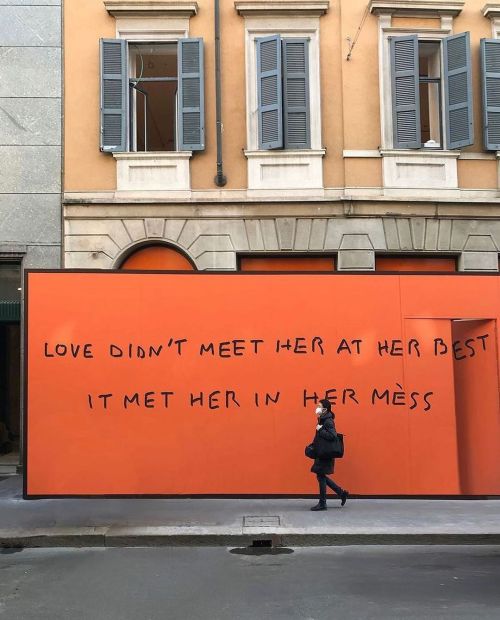
Humour from Hermès.

In search of the elusive snow leopard.
The stones of Stenness, Orkney, Scotland, 1906.
Molly Mahon’s marigold wallpaper.
Exquisite ceramic flowers by Kaori Tatebayashi.
Humour from Hermès.
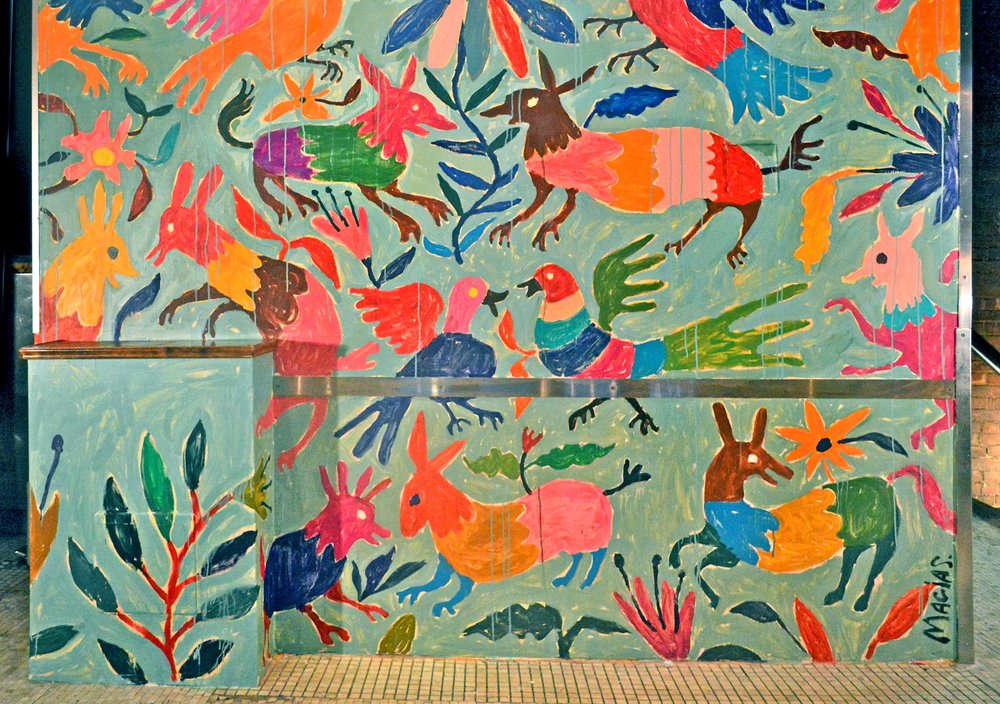
There’s a joie de vivre to Abel Macias’ work that I’m instantly drawn to. Macias’ Mexican heritage shines through every brushstroke. His murals are exuberant; think swirly trees, Otomi birds and multi-coloured cacti. His paintings of rocks, rainbows and desert scenes have a childlike simplicity that’s hard not to love. There’s an inherently positive vibe that runs through his work. Just what the world needs right now.
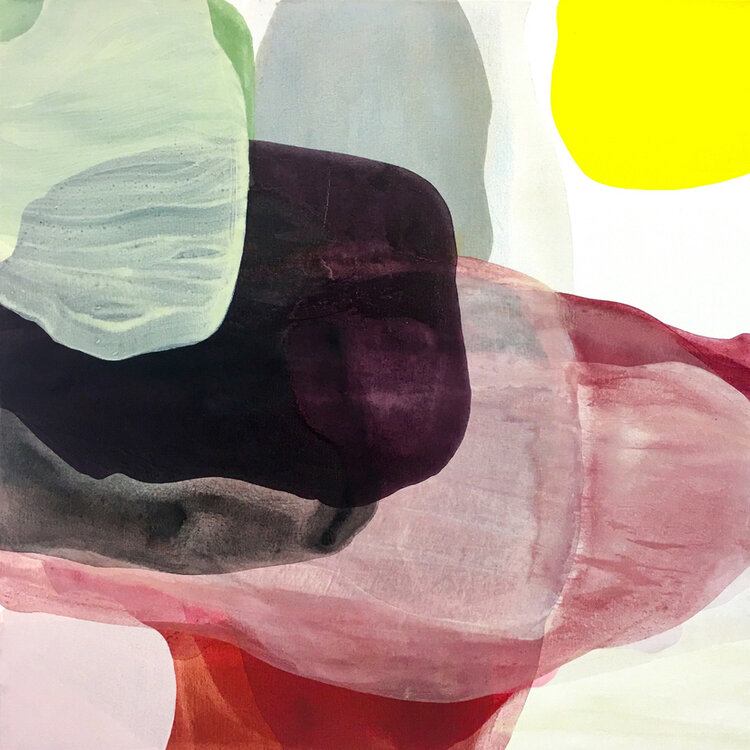
When I read that Helle Kaarem had a background in stained glass, it made so much sense. A deep appreciation of colour and light as expressions of emotion sweeps through her large scale abstract paintings. Her layers of irregular jewel tone shapes look like sea glass that’s washed up on a beach. I love how the colours are both clean and muddy, opaque and translucent, and how somehow, they all work so beautifully together.
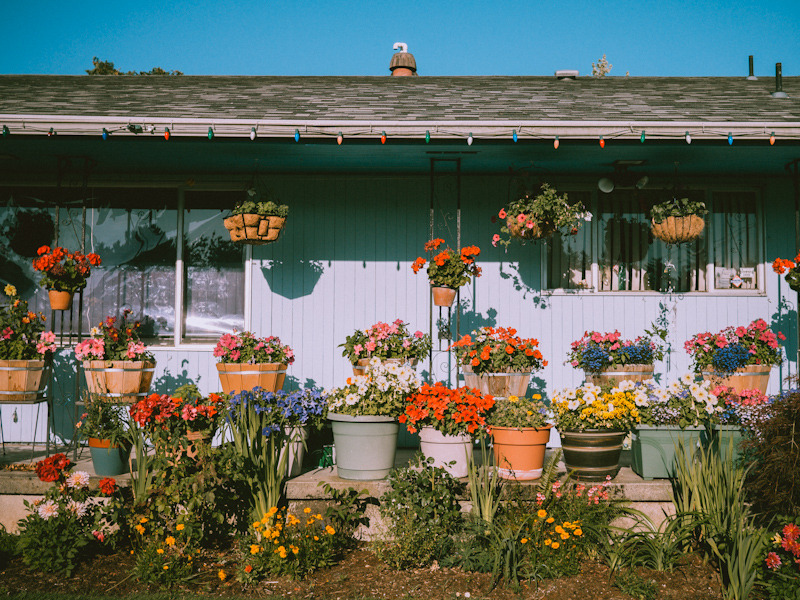
On his wet and slushy day, I bring you a garden in full bloom. Geraniums, dahlias and zinnias, galore. It’s one of my favourite things, mismatched pots stuffed full of summer blooms. And look, they’ve even got colourful fairy lights nailed to the eaves. Only a month and a chunk to go, before daylight saving time begins.
These images of starlings flying in unison across a moody Danish sky are breathtaking. The series, shot by Danish photographer, Søren Solkær captures the wonder of migrating birds. “Shapes and black lines of condensation form within the swarm, resembling waves of interference or mathematical abstractions written across the horizon,” he writes. “At times the flock seems to possess the cohesive power of super fluids, changing shape in an endless flux. From geometric to organic, from solid to fluid, from matter to ethereal, from reality to dream –– an exchange in which real time ceases to exist and mythical time pervades.” Many of his images look like abstract graphite drawings, and this one is so saturated with starlings that it could be a Jackson Pollock. They really are mesmerizing.

For a long time, I’ve thought about creating a textile made up of swatches of fabric that hold significance for me. Between boxes of richly patterned baby clothes, vintage t-shirts, old curtains, pochettes, and fabrics snapped up at markets all over the world, I could fashion a rather large wall-hanging of material memorabilia. Well, when I say, I –– what I mean is a good sewer, because I’m hopeless with a needle and thread. These beautiful pieces by Japanese-Jewish textile artist, Magumi Shauna Arai offer inspiration. Each one pays homage to the Japanese Boro tradition, (meaning “rags” or “tatters”) and combines Arai’s hand-dyed fabrics with a smorgasbord of vintage textiles. This may be another one of those creative projects that never makes it to the wall. Fun to think about though.

Unlike her Mum, who’s drawn to a kaleidoscope of colours, my daughter’s palette skews more neutral. With the exception of an occasional stripe, she has little interest in print. Frill and flounce have no place in her wardrobe. It’s hard to imagine that Iole once lived in frothy ballgowns and wore tropical fruit on her head. For years, she was a jumble sale of smocked Liberty dresses, stripy leggings, glittery shoes and ridiculously large bows. Yes, I had a lot to do with this hodgepodge aesthetic, but the flare with which she wore it, that’s all hers. And then at age seven, feathers and florals were abruptly abandoned in favour of lycra. She changed her style to fit in at a new school. Black leggings, cotton tees and oversized hoodies in various shades of cement became her uniform. And while I missed the colour and originality of her outfits, and lamented the loss of her un-self consciousness, I did appreciate this new minimalism. I also came to understand that her need to see herself mirrored in the girls around her was both natural and necessary. We are alike my daughter and I, and we share a lot of common interests; our taste in clothes could not be more different. And that’s a good thing. These days, she cringes when she sees old photos of herself in lamé leggings and a sequin bolero. “I can’t believe you let me go to school wearing that!” I don’t say a word. The sartorial journey is long. As is life. Fitting in is innate. So is standing out. Expect plenty of black, with chances of ruffles.

Most glassblowers try to avoid air bubbles, but Steffen Dam embraces them. The bubbles make his aquatic specimens look more lifelike. It’s extraordinary to me that these beautiful creatures are all blown from glass. They look utterly realistic. “My jars contain nothing that exists in the ocean, my specimens are plausible but not from this world, and my flowers are still unnamed,” says Dam who trained and worked as a toolmaker before discovering glass. “My aim is to describe what’s not tangible and understandable with our everyday senses.” Dam’s creations spring entirely from his imagination, inspired by the natural history books and insect collections that he explored as a child. I find his jars series beautiful and mesmerizing.

British Sculptor, Laura Ellen Bacon‘s otherworldly sculptures.
The exquisite mind and craftsmanship of Rowan Mersh.
Alexander Calder’s Connecticut studio.
Yuko Nishimura‘s beautiful paper sculptures.
Bold and bizarre forms from German ceramic artist, Monika Debus.
British artist Victor Pasmore at work.

All rights reserved © La Parachute · Theme by Blogmilk + Coded by Brandi Bernoskie
