Life

an education

June 15, 2020

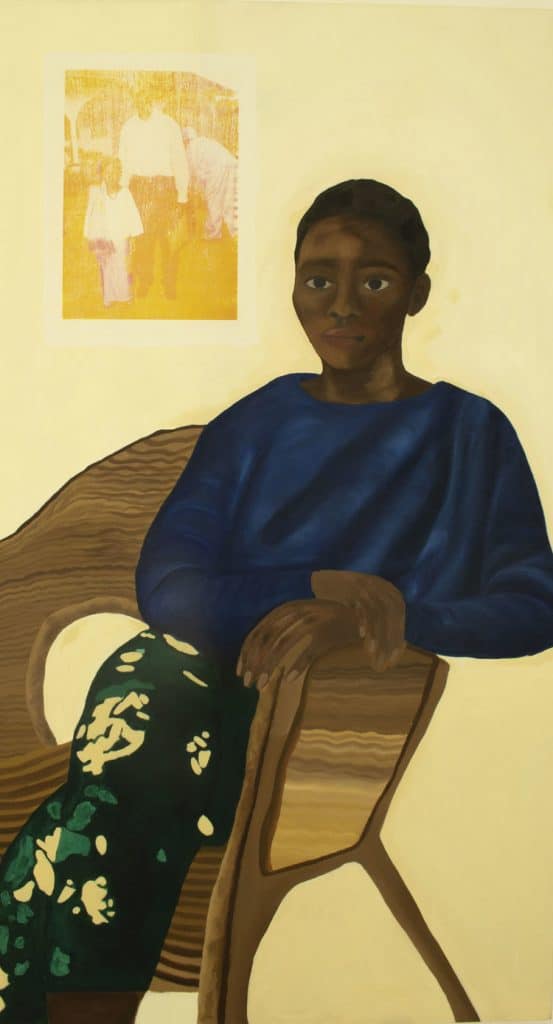
In five years of art history studies, Jean Michel Basquiat was the only black artist that made it into our curriculum. While I am grateful for the curiosity and passion my schooling fuelled in me, the overall picture was shamefully incomplete. We learned about Jackson Pollock, with no mention of the indomitable Lee Krasner. We learned about Robert Motherwell, with no mention of his extraordinarily talented wife, Helen Frankenthaler. There was nary a mention of African American Colour Field painter Sam Gillian. And nor did celebrated collagist and pioneer of African-American art, Romare Bearden make it into our text books. It was only last week, while reading about the Harlem Renaissance, that I happened upon the pure, vivid colours of Beauford Delaney. And what about Aaron Douglas, Palmer Hayden and Archibald Motley? This week, my feed has been chock full of beautiful, arresting art by contemporary black artists such as Chris Ofili, Tobi Alexandra Falade, Lubaina Himid, Kehinde Wiley and Hurvin Anderson, to name a few. We can’t rewrite our education, but we can add to it.
spin a tale, weave a story

June 12, 2020

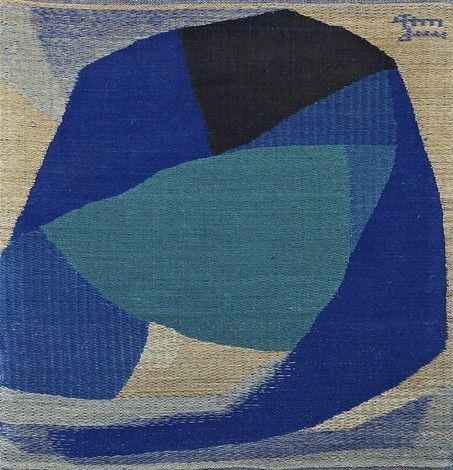
It was this little fish that led me to the work of Damask weaver, Dora Jung. Geometric forms and vivid colours characterize her work, which spans over five decades. Jung’s father bought her a loom when she was a child and a lifelong love of weaving was born. Her more asymmetrical designs and abstract patterns are beautiful; Abstract Blue is a woven painting. “Jung was a person of her time: her pictures were built strongly on a strongly visual ideology,” notes scholar, Päivi Fernström. “This was connected to a mythical power coming from the material and the work of the hands. Jung did not want to give any artistic responsibility to the loom.”

flight of fancy

June 11, 2020

It wasn’t until the late 1920s that technologies in dance photography evolved to allow photographers to capture their subjects in flight. Charlotte Rudolph‘s images of a leaping Gret Palucca advanced both women’s careers, lifting Palucca to international fame, and landing Rudolph centre stage in her field. I love so many of Rudolph’s images, but this one in particular, with none of the tidiness and finesse we associate with dancers, is my favourite.

tree of life

June 9, 2020

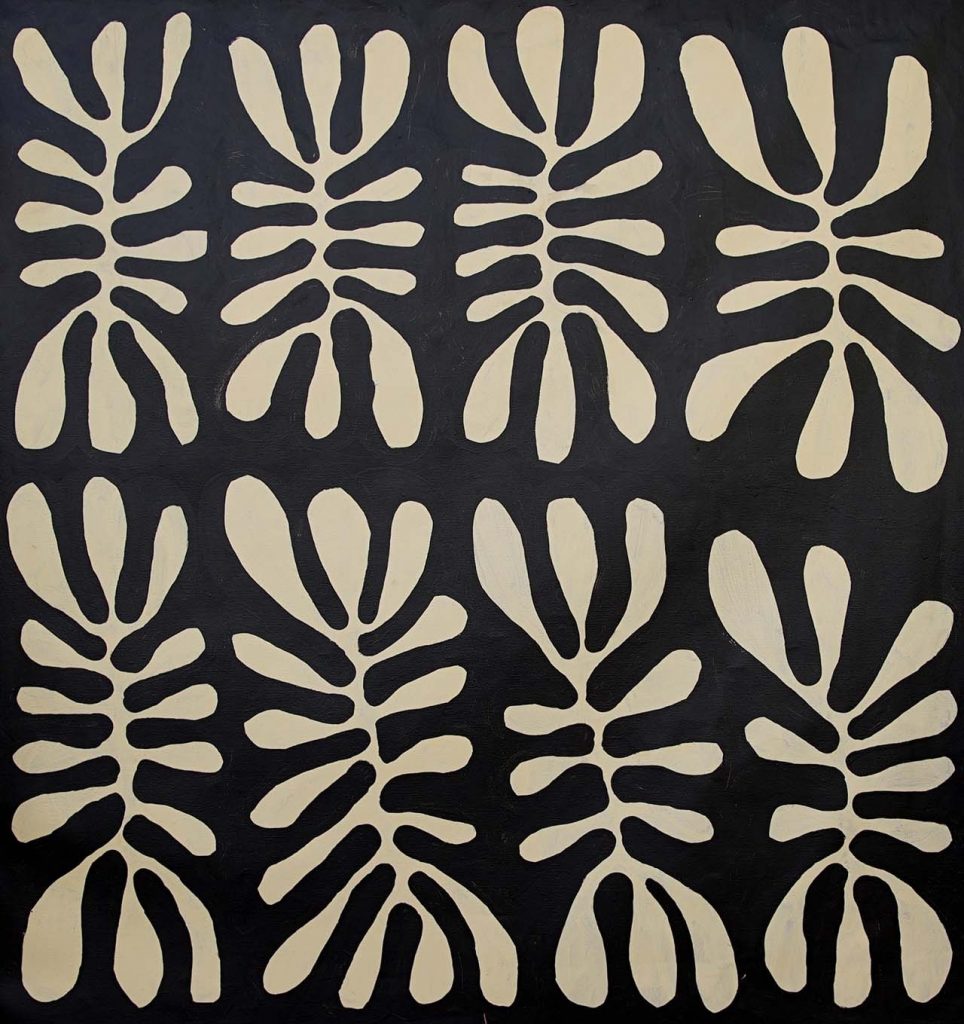
This is such a familiar motif, one that most of us associate with Matisse’s leafy cutouts. But last week, I read about the art and life or Aboriginal artist, Mitjili Napurrula for whom Acacia trees were a central theme. The recurring motif was inspired both by her father’s ceremonial spears (carved from Acacia) and the patterns her mother used to draw in the sand. Before Napurrula became an artist in her own right, she did what many female artists of the Central Desert did, and assisted her husband, Long Tom Tjapanangka produce his paintings. By the 1990s, Napurrula’s artistic career began to flourish. Today, her vivid colours and bold patterns are recognized internationally. Napurrula passed away last year.

La Quarantaine

June 8, 2020

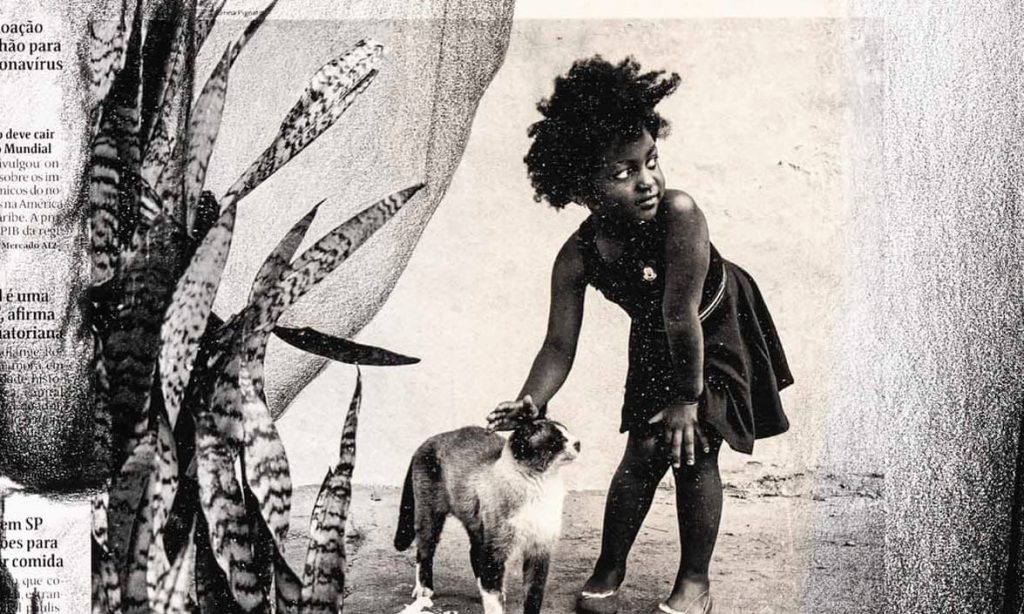
Tatiana Trouvé is a contemporary visual artist based in Paris. Her diary of 40 days in quarantine is a compelling chronicle of a world in lockdown. The project is made up of 40 drawings scribbled on the front pages of newspapers from around the globe. Trouvé chose progressively minded newspapers, like South Africa’s Sunday Times, and Spain’s El País. “The idea was that by reading the newspapers I would get out of the lockdown and find out about life outside. It was about being connected to the rest of the world outside of my studio,” says the artist. “‘Sometimes I would just draw over the front page and insert some moment from my daily life.” She views the project as “a kind of diary, day after day, in my studio, with Lulu, (her dog) my projects and the confinement.” To respect our need for connection, while reflecting on our personal response to isolation, is an idea that may resonate with us all.

moulin rouge

June 5, 2020

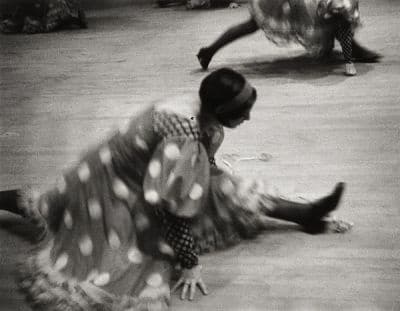
I came across this image today, taken by German avant-garde photographer, Lise Bing of a can can dancer at the Moulin Rouge in the 1930s. I read a little bit about Bing –– an influential photographer, who ran with the likes of Cartier-Bresson, Man Ray, and Brassaï –– but I thought mostly about the dancer in the picture. The strain on her body, to dance night after night, for a pittance. That she was likely a prostitute, who like the famous Jane Avril, had run away from a life of poverty and abuse. That it was a thrilling life, and a gruelling one.

Here I am

June 4, 2020

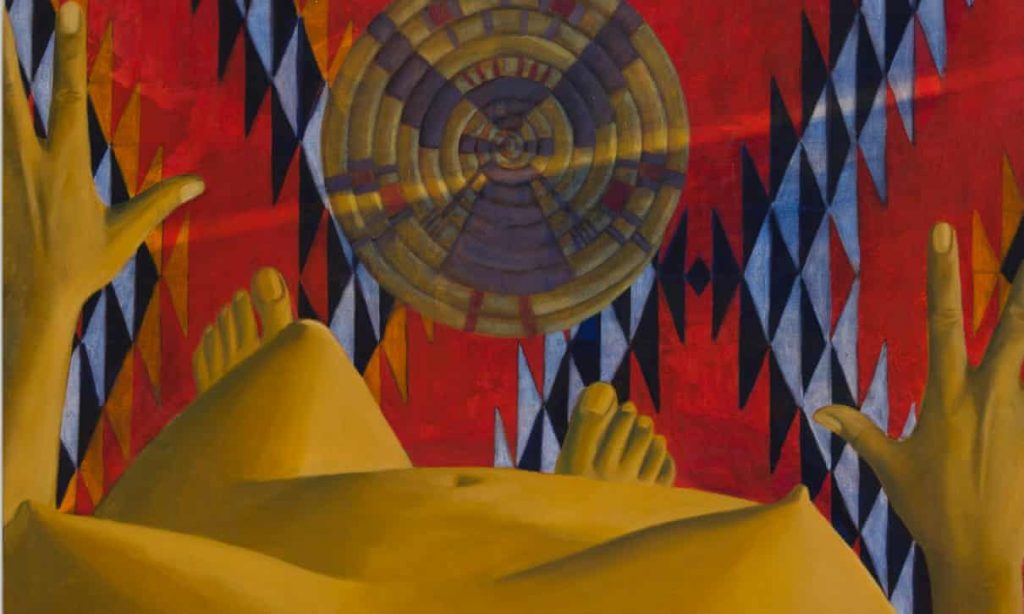
Yesterday, street photographer, Scott Schuman, whose work I have admired for many years, said that he does not feel educated enough to weigh in on the issues and complexities of race, and that for now he is channeling his energies into listening and learning. And doing what he does best, which is sharing beautiful images from recent weeks that have moved him. In the spirit of sharing beauty, and bringing awareness and appreciation to the marginalized, overlooked and misinterpreted, I bring you an artist a day, every day, for as long as feels necessary. At 99, Luchita Hurtado is just beginning to get the recognition she deserves. Although she has made art all her life, it was only recently, when the director of her late husband, Lee Mullican’s estate stumbled upon drawings and paintings signed, “LH” that decades of work was released into the world. Born in Caracas, Hurtado has lived a peripatetic life, between the Dominican Republic, Chile, the USA, Mexico and Italy. De Koonings, Chagall and Léger were all pals. I read that Duchamp used to massage her feet. Themes of motherhood, nature and family are central to her work. “I think I became an artist because of nature,” she says in this moving film. “I remember as a child watching a butterfly break its cocoon and experiencing these extraordinary feelings towards it.” This self portrait painted in the walk-in closet of the home in Chile she shared with Mullican in the 60s, is an intimate perspective on how the artist sees herself, and her surroundings. Reflecting back on the painting, and the streak of light across the Navajo rug, Hurtado now says, “I concluded, that’s all I have in the world, is myself. And I am who I am because I am doing what I want to do, and not what I am told to do.”

Ich bin mein Stil

June 2, 2020

“Now is not the time for posting pictures of fiddleheads on a Crate & Barrel plate,” I said to Jason rather haughtily yesterday afternoon. A man was murdered for buying cigarettes with a fake $20, the world is being ravaged by a deadly virus, and nearly half the global workforce is at risk of losing livelihoods; there is no place for green beans on pretty plates. No sooner had the words left my mouth, that I wanted to retract them. Or re-phrase them. Or suction the arrogance out of them, at least. One never knows what someone is going through, how they process things, how they cope, and really, who am I to judge? I am forever seeking out, and sharing beauty in an effort to uplift, to inspire, and at times, to escape. La Parachute is a love letter to beauty. Art, design, food, flowers. But in these challenging times, is it insensitive to wax lyrical about lilacs? To post pictures of your artfully plated dinner? This morning, the world responded, one black square after another. It was a relief. Quiet. Time to reflect. My blog is my studio, my study, my sanctuary. I’m not sure what I’ll write about tomorrow, or the day after that. But I will write.

art matters

June 1, 2020

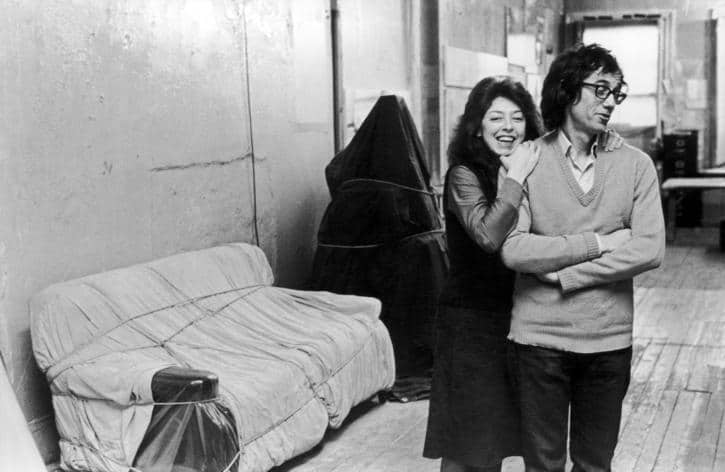
I was so sad to hear of the great land artist, Christo’s passing yesterday. In the midst of all this turmoil –– mass deaths, senseless murders, riots, financial fragility –– Christo and Jean Claude’s Pont Neuf swathed in 440,000 square feet of golden fabric felt like a beacon of hope. Art has always played an integral role in our society. Art educates and punctuates. Art uplifts and inspires. Art helps us connect with one another. Art helps us connect with our inner most selves. Art distracts us from reality, and forces us to look straight at it. When Christo first arrived in Paris in 1958, he began his career by wrapping small, empty cans of paint. He then made his way on to barrels. Can you imagine people’s responses to his early wrapping projects, and what those same individuals had to say when Christo and Jean Claude (his life/work partner of 60-years) proposed the idea of wrapping one of the sculptures in the garden of the Villa Borghese in Rome? Wrapping Pont Neuf in Paris took nine years of negotiations and wrapping the Reichstag took around 25 years. It seems that Jeanne-Claude was the negotiator. It requires tenacity, audacity, courage, humility and great conviction to push through the naysayers, and release your work into the wild. It always struck me that Christo –– ever the egalitarian –– never allotted specific meaning to his grand scale wrapping projects. “Every interpretation of the project is legitimate, even the most critical and the most positive,” he once said. “This is why I enjoy these projects. They have open dimensions that absorb everything.” I choose to see hope. I choose to see possibility. Christo’s last project, the wrapping of the Arc de Triomphe was slated to go on view this September, but has been pushed back a year, to 2021. In a 1958 letter Christo wrote, “beauty, science and art will always triumph.”

Kuba

May 29, 2020

I love this Kuba inspired cloth wallpaper from St. Frank. Kuba cloth is unique to the Congo, and was traditionally used during burials. Later, it was woven into ceremonial dresses worn at dances and other celebrations. St. Frank founder, Christina Bryant has the wallpaper on several surfaces throughout her eclectic NYC home. It looks beautiful behind her hand carved bowls and colourful books and tchotchke.

All rights reserved © La Parachute · Theme by Blogmilk + Coded by Brandi Bernoskie