Luma and I stood outside Mount Sinai today for over an hour waiting for a Covid test, and all the while I thought about her birth. I thought about her birth, and I thought about Antimo’s birth a few years prior, and about Iole’s birth a couple of years before that. I told Luma how we zoomed along Murray Street in the early hours of the morning, and how eight hours later she flew out of me with three almighty pushes. I told her how her Papa and I, with our parents, sat in the Tim Horton’s at the corner of College and University at midnight, me in my nighty and bare feet, eating bagels and drinking tea as we waited for Iole to come. Antimo was the quietest of the three; he arrived with little fuss or fanfare and settled into my chest like he’d lived there forever. The world is weird. A mile long lineup of people, six feet apart, in surgical masks. And there we were, singing Blondie songs, sharing stories, and trying to make it all feel less weird.
My grandmother taught me to ride a two-wheel bicycle. She taught me to distinguish a salad fork from a lobster fork and how to make the perfect hospital corner. She also taught me a mean game of Gin. We played for hours, like two old dames, in a 1940s movie. “Breast your cards,” she’d whisper from the other side of the kitchen table. She had beautiful hands; I loved the sight of her French manicured tips pressed against her cards. Years later, my little Florence flat turned into the Gin headquarters, where we’d all convene to play cards, cook and drink Italian plonk. When we travelled, Jason and I always packed a deck of cards for long flights, delays in crummy airports, and rainy days stuck in a hostel with little to do. In Koh Samui, where it rained everyday, we must have played a thousand games of Gin on the porch of our little straw hut. And Shithead. By then our repertoire had expanded to include two games. Shithead is good, too. But there’s nothing like Gin Rummy. Last week, I taught the children to play, and they’ve since made Gin their evening activity. They play for hours. My grandmother’s version was the classic, and ours permits picking up the entire discard pile. We’ve made other adjustments that she’d likely turn up her nose at. But I think she’d be happy to see her great grand children playing cards. “Lucky in cards, unlucky in love,” she’d say to us all, peering over her reading glasses.
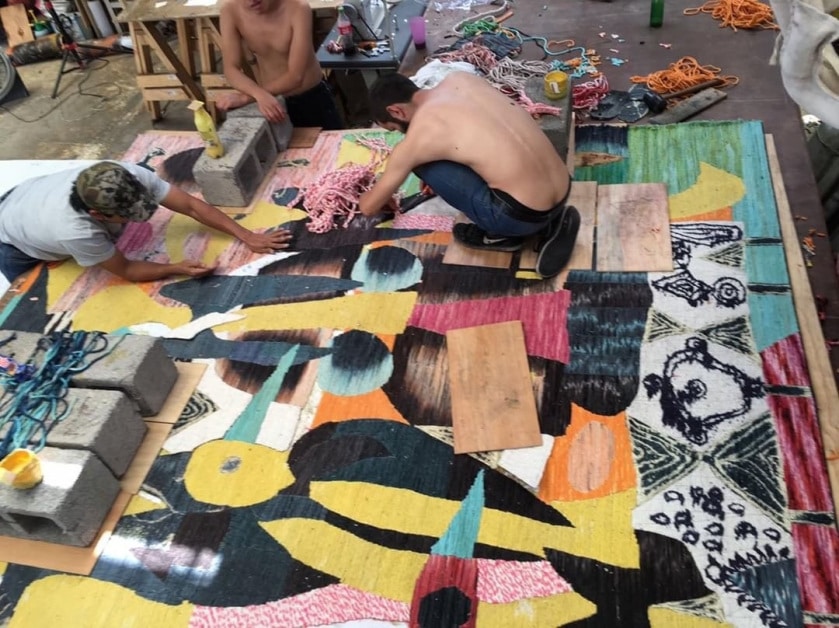
Yann Gerstberger is a storyteller. His large scale textile tapestries are dense with patterns and motifs that tell his stories. Made of hand-dyed cotton fibres (taken from mops) and industrial fabrics that are glued to a vinyl surface, Gerstberger’s process is as crude as it is painstakingly refined. “I started to use mops because they are the most basic, common, easy-to-find kind of fabric,” he says. Gerstberger dyes his fabrics using both natural and industrial dyes. “I sometimes use a sprayer full of chlorine to draw directly on my materials, graffiti like.” As with all great artists, Gerstberger draws from a multitude of influences –– popular culture, Mexican culture, (he lives in Mexico City) Yoruba art –– to create a style that is all his own. Matisse, Picasso and Picabia are all inspirations. “I think what’s cool when you are an artist is you can drive (and eventually run over) those categories because you’re generating another kind of language that goes beyond those definitions,” he says. This short film shows the artist at work in his studio. It’s pretty amazing; his process, the colours, the fantastical shapes and the richness of his story telling.
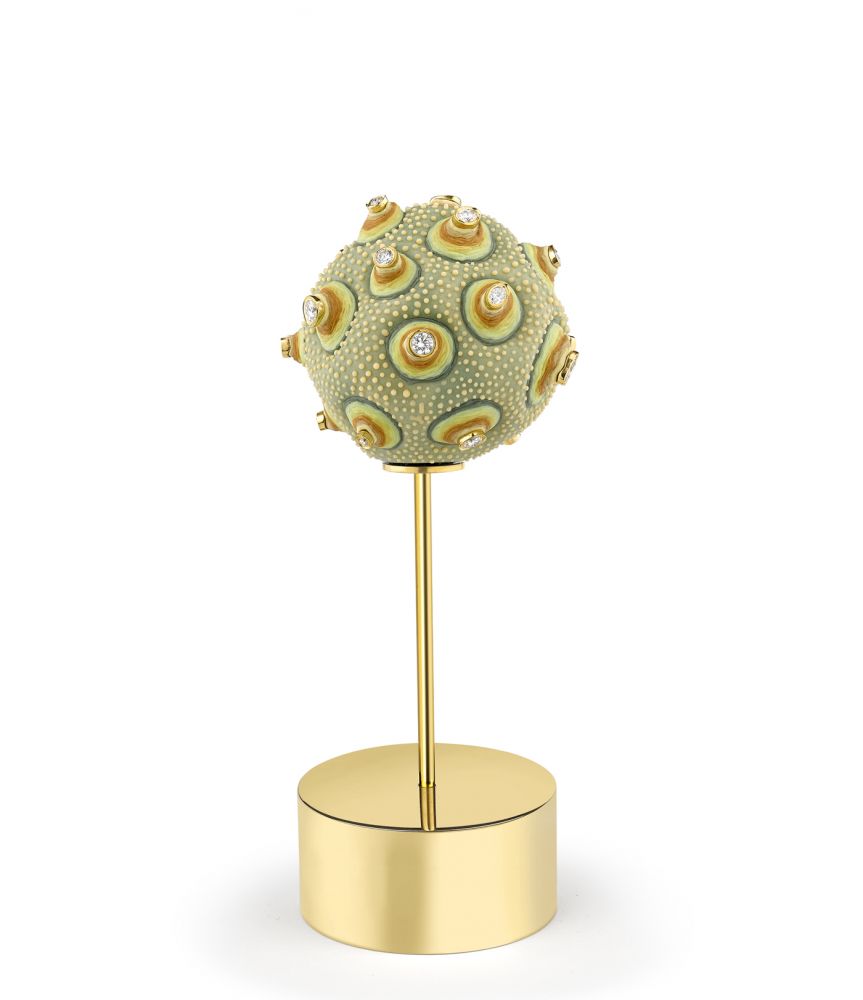
I get really excited when two talents with different aesthetics collaborate on a project. Minds meet, stars align. Boom! Jessica McCormack designs heirloom jewellery that is as classic as it is edgy. The Haas bothers create otherworldly sculptures –– think colourful beasts and sea monsters –– that double as furniture. McCormack, and artists twins, Simon and Nikolai Haas have created a line of jewellery and jewellery boxes that reflects their respective originality, whimsy, sense of humour and play. “Collaborating is fun because you just learn so much,” says Simon Haas. “That’s the exciting part for me, that you get to enter somebody else’s world.” The creative process was very organic. “Once we got started it was like a runaway freight train,” says McCormack. Together, they created bejewelled sculptures –– colour glazed ceramic, whacky textures, and brilliant diamonds –– that are adorable and bizarre. And jewellery boxes –– lined with elephants, cacti and jellyfish trees –– that aren’t your typical heirloom. “We’ve created beautiful things that bring a lot of joy,” says McCormack.
“Don’t be afraid to write badly,” says author, and comedy writer, Bess Kalb. “Just get it on the page. Don’t get precious. Don’t worry if it’s good….. because occasionally, good things come out of it.” I love this advice. So many ideas live in a vault because we don’t think they’re good enough to be released. And a lot of the time, they aren’t. But as Kalb says, once in a while there comes a gem –– a rough diamond that we cut and polish –– that turns into something beautiful. We don’t find the diamonds without sifting through the stones. I’ve written a lot of shit over the years, and by shit, I mean words that look pretty on a page, but are too self conscious to have any kind of impact. I’ve also written sentences, that with very few words, none that require a dictionary, perfectly capture a feeling. That always feels like a triumph. Simple, honest writing. There’s a freedom in releasing a thought to the page. At least it’s not rattling about in that tin box upstairs. Spew it out. Tidy up later. And yes, “don’t be afraid to write badly.” In her warm and human memoir, told from the perspective of her beloved grandmother, Kalb does what every writer strives to do; take all the rough edged stones collected over years and turn them into a diamond.
“Of all mediums, clay is the most versatile, pliable and human,” says Kenyan-born British studio potter, Magdalene Odundo. The magnitude of possibility never seizes to amaze me. Every potter begins with the same ball of mud. Rogan Gregory morphs his mud into anthropomorphic lights. Barbro Åberg turns clay into spirals, pleats and bubbles. Floris Wubben‘s functional vessels look like parts of a machine. I’m often humbled by how far the medium can be stretched in the hands of someone as daring, imaginative and original as artists such as these. Have a scroll through Ceramic Mix. You’ll be swept away.
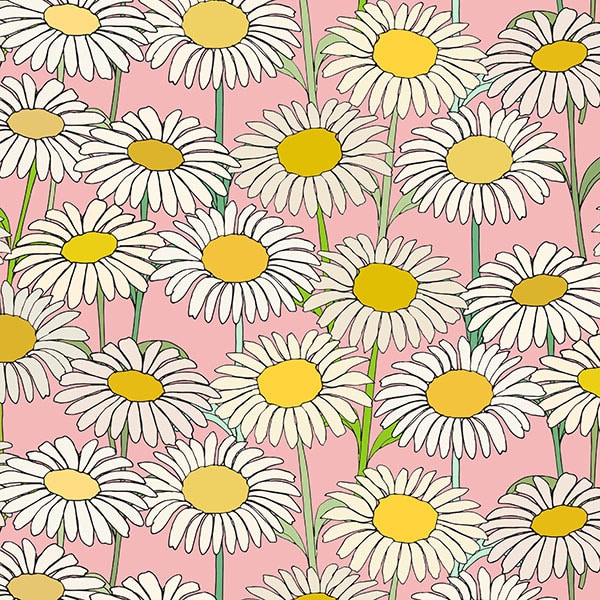
He loves me, he loves me not….. Daisies are that sweet little flower that everybody loves. This Abby Galloway print is charming. Have a look at her other patterns –– sunflowers, watermelons, mushrooms and pineapples. Galloway’s style is fresh, cheery and nostalgic. The teenager in me would love to see all the above emblazoned across journals, throw cushions and wallpaper.
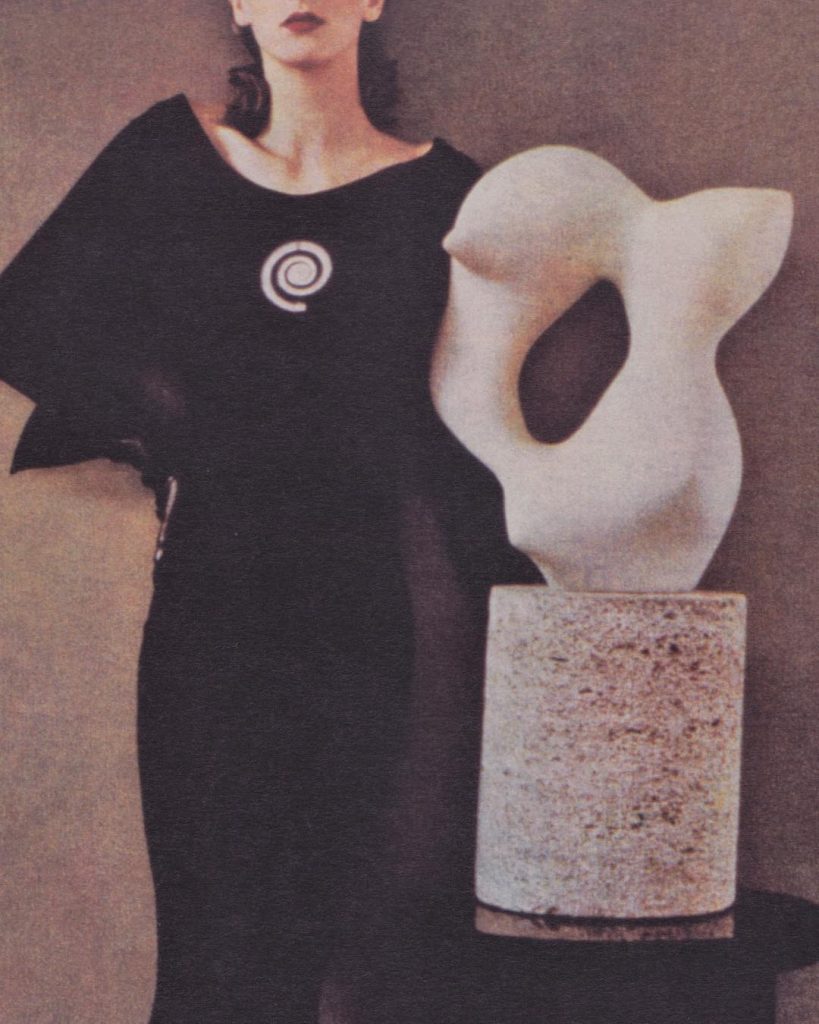
“Juggling motherhood and any career can be a struggle, but there seems to be something about the role of artist that makes the combination more than usually problematic,” writes Hettie Judah in today’s Guardian. As I read the words, I did a quick mental rolodex of women artists. Georgie O’Keefe, Marina Abramovic, Tracey Emin, Helen Frankenthaler, Bridget Riley and Barbara Hepworth all sprang to mind. Interestingly, only Hepworth had children, and she’s been often criticized for sending her triplets away when they were infants so she could focus on her work. “The thought of not having them with her made her deeply unhappy, but the thought of not being able to do her work also made her deeply unhappy,” writes Caroline Maclean in her new book Circles and Squares. I then thought about the women artists I know, friends of mine, who have left their infants for weeks on end to shoot a documentary on the other side of the world, dragged their kids city-wide on photoshoots, or upped and moved an entire family for a film, and the shame and euphoria they’ve experienced in doing so. In an essay, , published as part of a report on the representation of female artists in Britain during 2019, Judah tackles the many challenges that artist mothers face, from the harsh reality that one’s physical and emotional energy is no longer dedicated to art, to the unrealistic expectations placed upon them by curators and gallerists, to the unrealistic artist’s lifestyle. “Artist mothers unable to participate in the ‘bohemian lifestyle’ –– the nightlife, parties and wild behaviour –– have found themselves cut off from their peer groups. One described the switch to motherhood as an experience akin to selling out or joining the bourgeoisie.” And of course, there’s the selfish mother syndrome that plagues most working mums, and may be more charged in women that choose a path that demands time away from their children with erratic returns. With little to no income, art starts to feel like a hobby, mummy’s little pastime, increasingly hard to justify. “The guilt experienced by artist mothers is rooted in broader cultural issues: art doesn’t come with a fixed wage or an established career trajectory, the making of it doesn’t have an easily quantifiable value,” writes Judah. “With childcare costly, how dare you spend money to work without guaranteed financial reward? How dare you take time for your work away from your children? How dare you bring children into the insecurity of an artist’s lifestyle?” The urge to paint or sculpt is in some women as innate as the urge to bear children. Science suggests that women may even become more creative after having children. Which is why so many women feel guilt and conflict in the early years of motherhood when they are fulfilling one urge and starving another. To balance that surge of creativity with the enormous demands of motherhood is a formidable task. Some manage it, most don’t. “Newborns have scant respect for mothers’ other forms of creativity,” writes Judah. But as children get older, and go to school (hoorah) there is a slow and quiet re-claiming of one’s creative energy, an energy that was very possibly fed by the struggle and joy of early motherhood. “A writer friend once told me that she loses two books with each child she has. ‘But then you come back motivated and write differently than you would have before.’ Who can define what is actually lost?” says writer, Hadley Freeman. Mums are very good at filling an hour with sixty minutes, she adds. “It turns out you don’t need eight solid, uninterrupted hours to do your work, that a gratefully grasped hour will suffice.” You produce what you can, when you can. Totonto writer, Kerry Clare wrote 1000 words a day of her novel while her daughters watched Annie beside her. Initiatives that support female artists juggling work and parenthood, such as the Mother Prize the Procreate Project, Residency in Motherhood and Artist Mother Studio, to name a few, are clearing the path. Judah is optimistic. She sees a slow shift in attitude, thanks in part to the pandemic. “With its evening events and international travel schedule, the art world pre COVID-19 was not well suited to artist parents. Perhaps the pandemic will force a change, a softening, a focus on local scenes, or change in tone that could make it more inclusive,” she writes. “Brilliant artist mothers exist –– celebrating them is important if we are to shift the enduring cliché that a woman cannot be both.”
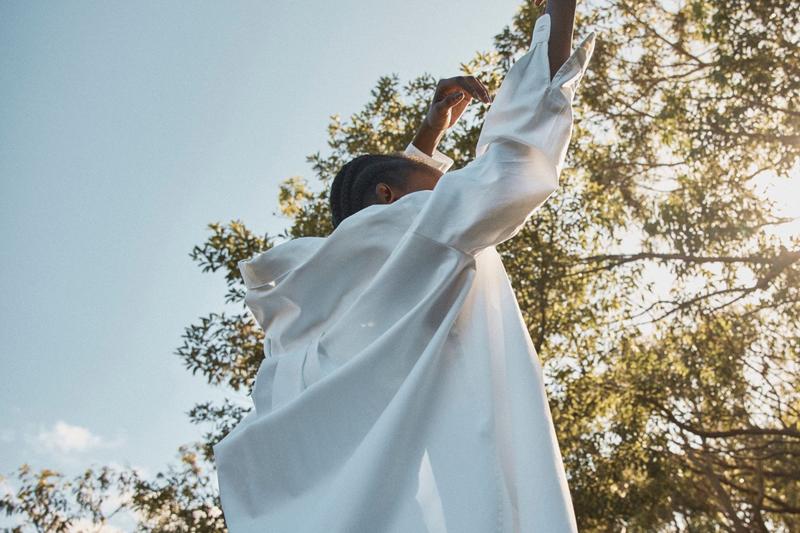
Feminist, environmentalist, optimist –– Maggie Hewitt founded her company with the hope of making a difference in the world. And that she has. Hewitt is now one of the most recognizable names in sustainable fashion. I read that by the end of 2020, 50 per cent of Marilyn’s collections will be fabricated using recycled materials. The company ships its seasonal wholesale collections in biodegradable bags and is striving to be a 100 per cent carbon neutral business. With their simple silhouettes and no fuss elegance, it’s her dresses that are topping my wish list. This buttermilk silk classic needs nothing but a kitten heel, and this cream strapless number could literally go from garden party to the altar. Clothes that make you feel good about yourself, and about the planet.
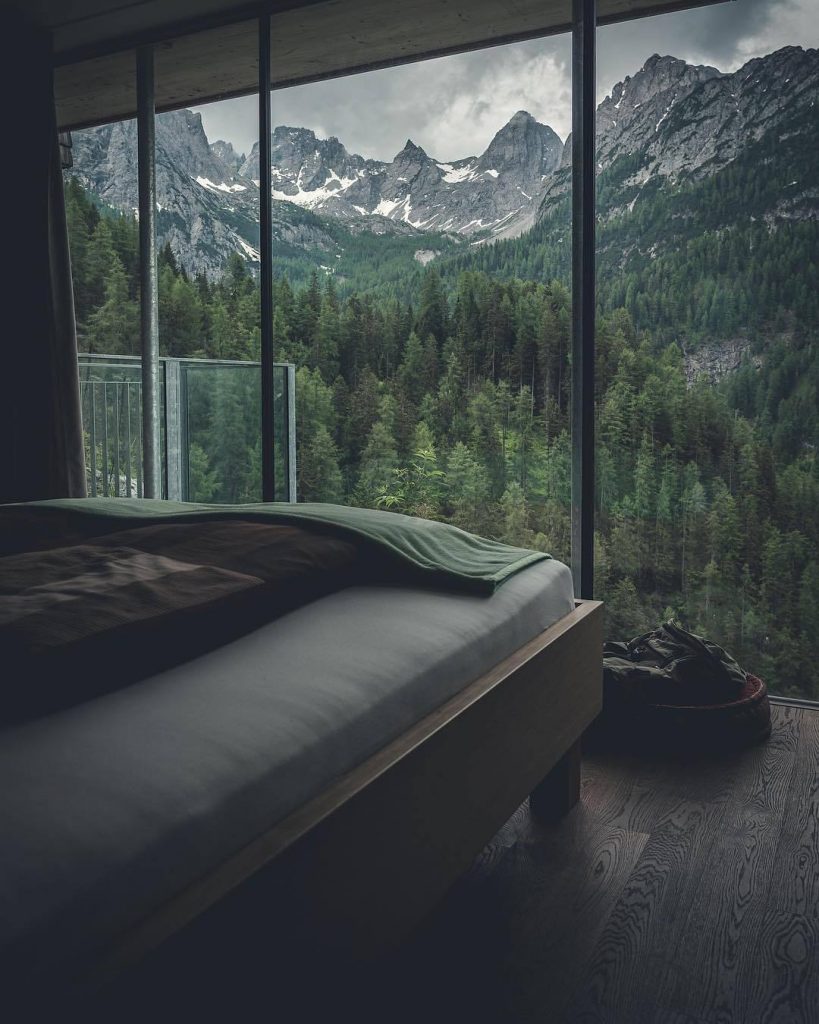
To look out a window and see mountains covered in a blanket of green can only mean a good start to the day. With a little internet sleuthing, I found the photographer, Flørian Jøhaenntgen (his adventure filled pics are breathtaking) and the hotel where this image was taken. Sledding, hiking, biking…that is what travellers come to Austria’s DOLOMITENHÜTTE to do. It was built in the mid 1930s and it’s been re-designed over the years. It’s current incarnation looks rustic, and yet truly elegant, with four spartan rooms boasting breathtaking views like this one.