Inspiration

northern lights

June 23, 2020

With England preparing for a heatwave, the Tate posted this Chris Killip photo of a couple cat-napping in the British sunshine. From men fishing and children playing to sea coalers and couples eating fish and chips, Killip is known for his gritty reportage of communities in the northern regions of the U.K. Newcastle’s Anarcho-Punk Scene was central to Killip’s work in the 80s. “They are at the tough end of things, the people in my photographs,” says Killip. “It’s about the struggle for work, being out of work, fighting for work.” In this moving film, Killip speaks of the reverence he holds for his Dad, how he came to be a photographer, and how in spite of his large view camera, he was able to capture his subjects closely and authentically. “I use a plate camera and it’s very conspicuous, and I have a pistol grip so that I can trigger the shot with my thumb…. So you don’t know when I’m going to take a picture. Nor do I. It’s quite silent. And I don’t bring the camera up to my face.” Killip’s spends a lot of time with people, and immerses himself in their communities, so that his camera isn’t something odd and intrusive. “I can become part of the furniture.” Here, David and “Whippet” wait for Salmon to swim the stream in Skinningrove, North Yorkshire.

greenthumb

June 22, 2020

A number of people I know have either started, or added to an indoor garden in the last few months. My friend, Olivia has amassed a family of over 100 plants, several of which travel back and forth with her between her London flat and house in Norfolk. I’ve seen the joy these plants have brought her; the sense of purpose that caring for them has given her, and the satisfaction she’s gained through watching them blossom and grow. Plants are the embodiment of life, growth and progress, and surrounding ourselves with them can be rooting and lifting. If you have a moment today, have a walk through designer, Hilton Carter’s plant-filled apartment. His collection came out of nowhere, and multiplied gradually. “Ten went to thirty, thirty to sixty, and then all of a sudden, so many plants.” There is great tenderness and gratitude in Carter’s caring of his plants. “What helped me was understanding, really seeing and paying attention to a plant,” he says. “I’m not just bringing a plant in for the sake of adding colour or shape to a space. I am bringing life in.”

oil and flowers

June 19, 2020

I came across the work of American Impressionist painter, Mary Elizabeth Price today, and while I typically find Impressionism a little saccharine, her oil and gold leaf Hollyhocks jumped off the page at me. There’s something in the combination of mustards and pinks that I’m drawn to, and I love how densely packed the panel is. Price taught art to children at Greenwich House in New York City, but lived much of her life in her “Pumpkin Seed” home in New Buck, Pennsylvania surrounded by a garden of irises, peonies, mallows, delphiniums, poppies, hollyhocks, gladioli and lilies. “When I first saw the original cottage it was painted such a vivid yellow that I instinctively thought of a pumpkin; and it was so small that I named it Pumpkin Seed more in derision than anything else. But the quaintness of the name grew on us so that we’ve learned to love it.” 

baya

June 18, 2020

Baya Mahieddine‘s (1931-1998) art works are everything I love to see in a painting; bright, saturated colour, rich pattern, whimsy, spontaneity and rule-defying compositions. Baya discovered clay and guaches as a young orphan girl when she was taken in by French painter, Marguerite Caminat Benhoura. Benhoura gave her materials and introduced her to French and Maghrebi art veterans. At just 17, Mahieddine was discovered by French dealer, Aimé Maeght, and André Breton, who showed Baya’s works at the Exposition Internationale du Surréalisme at Galerie Maeght in Paris. Her “childlike” style inspired both Matisse and Picasso. Baya’s race and her gender, are central themes in her paintings. Birds, fish, flowers and fruits are recurrent motifs, a visual language cultivated in childhood, while living in a colonial horticultural farm with her grandmother after her parents died. Of Baya’s work, Breton once wrote, “It’s undeniable that, in her bag of marvels, love potions and spells, rival extracts of perfumes from the Thousand and One Nights […] Baya, whose mission is to recharge with meaning those beautiful nostalgic words: Arabia Felix.” The division of Western and non-Western art is démodé, and Baya refused categorization. Instead, she occupied a space that was all her own.

in fabric

June 17, 2020

There’s a little fabric shop near Queen and Spadina where piles and piles of colourful and richly decorated African textiles spill out from white mesh bins. I’m often tempted to buy a bundle of them and make them into place mats or napkins, or just admire them as a bundle on my kitchen table. This morning, I came across the work of London-based Ghanaian designer, Phyllis Taylor whose gorgeous line SIKA is fashioned from eye-poppingly beautiful West African textiles. “To convince somebody to take something that was made in Africa, with African print and made by a designer that was virtually unheard of, it was very difficult,” Taylor told the BBC of her early challenges. She has since emerged as a designer to watch, with coverage in Vogue, a growing fan base and collaborations a plenty. Taylor’s latest collection includes a Batik puff sleeve jumpsuit, bright pink shirt dress and zebra print bolero that fuse traditional African prints with cuts that are modern, sexy and bold. Each piece is made sustainably in Ghana.

paper and glue

June 16, 2020

I’ve always liked collage, and Israeli artist, Sharon Etgar‘s simple colour blocking really appeals to me. The tones –– nude, sand, mushroom and terracotta –– in her Collages II series are so earthy and soothing, and I love the bold monochrome in God Figures. Have a look at the beautiful chaos of her thread drawings as well as her highly textured paintings. Etgar lives and works in Tel Aviv.

an education

June 15, 2020

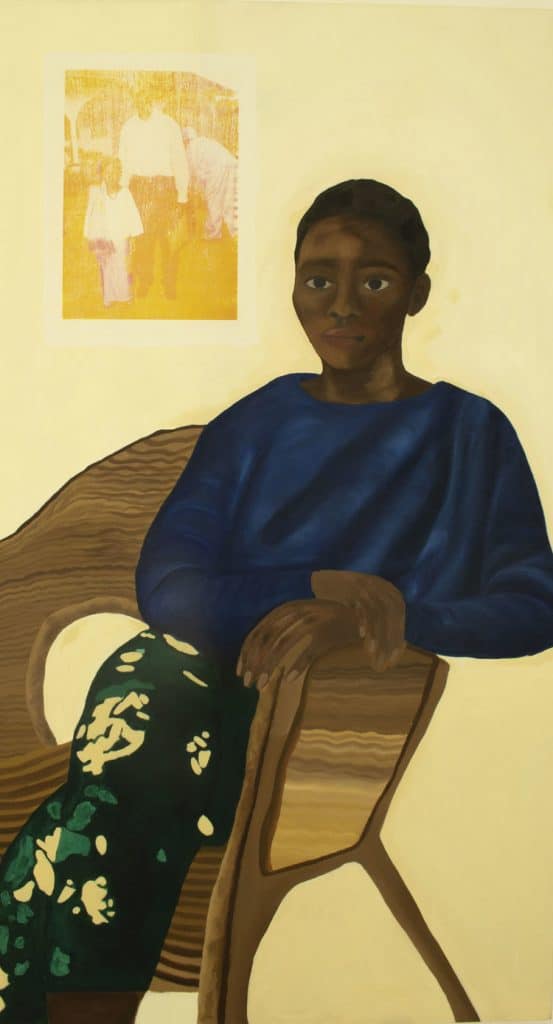
In five years of art history studies, Jean Michel Basquiat was the only black artist that made it into our curriculum. While I am grateful for the curiosity and passion my schooling fuelled in me, the overall picture was shamefully incomplete. We learned about Jackson Pollock, with no mention of the indomitable Lee Krasner. We learned about Robert Motherwell, with no mention of his extraordinarily talented wife, Helen Frankenthaler. There was nary a mention of African American Colour Field painter Sam Gillian. And nor did celebrated collagist and pioneer of African-American art, Romare Bearden make it into our text books. It was only last week, while reading about the Harlem Renaissance, that I happened upon the pure, vivid colours of Beauford Delaney. And what about Aaron Douglas, Palmer Hayden and Archibald Motley? This week, my feed has been chock full of beautiful, arresting art by contemporary black artists such as Chris Ofili, Tobi Alexandra Falade, Lubaina Himid, Kehinde Wiley and Hurvin Anderson, to name a few. We can’t rewrite our education, but we can add to it.

spin a tale, weave a story

June 12, 2020

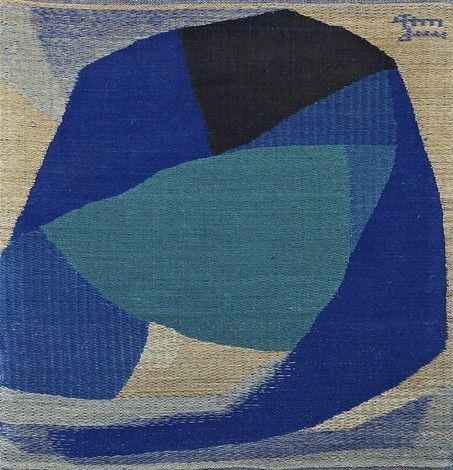
It was this little fish that led me to the work of Damask weaver, Dora Jung. Geometric forms and vivid colours characterize her work, which spans over five decades. Jung’s father bought her a loom when she was a child and a lifelong love of weaving was born. Her more asymmetrical designs and abstract patterns are beautiful; Abstract Blue is a woven painting. “Jung was a person of her time: her pictures were built strongly on a strongly visual ideology,” notes scholar, Päivi Fernström. “This was connected to a mythical power coming from the material and the work of the hands. Jung did not want to give any artistic responsibility to the loom.”

flight of fancy

June 11, 2020

It wasn’t until the late 1920s that technologies in dance photography evolved to allow photographers to capture their subjects in flight. Charlotte Rudolph‘s images of a leaping Gret Palucca advanced both women’s careers, lifting Palucca to international fame, and landing Rudolph centre stage in her field. I love so many of Rudolph’s images, but this one in particular, with none of the tidiness and finesse we associate with dancers, is my favourite.

tree of life

June 9, 2020

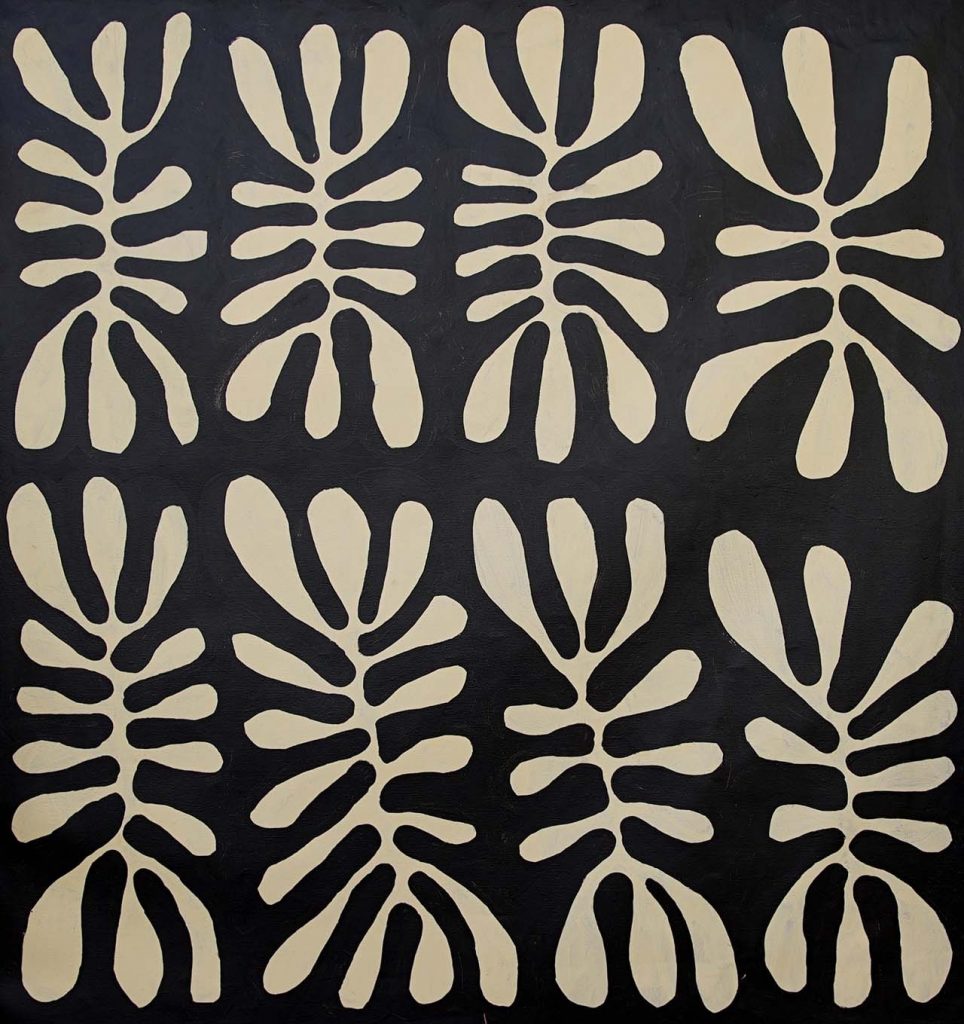
This is such a familiar motif, one that most of us associate with Matisse’s leafy cutouts. But last week, I read about the art and life or Aboriginal artist, Mitjili Napurrula for whom Acacia trees were a central theme. The recurring motif was inspired both by her father’s ceremonial spears (carved from Acacia) and the patterns her mother used to draw in the sand. Before Napurrula became an artist in her own right, she did what many female artists of the Central Desert did, and assisted her husband, Long Tom Tjapanangka produce his paintings. By the 1990s, Napurrula’s artistic career began to flourish. Today, her vivid colours and bold patterns are recognized internationally. Napurrula passed away last year.

All rights reserved © La Parachute · Theme by Blogmilk + Coded by Brandi Bernoskie