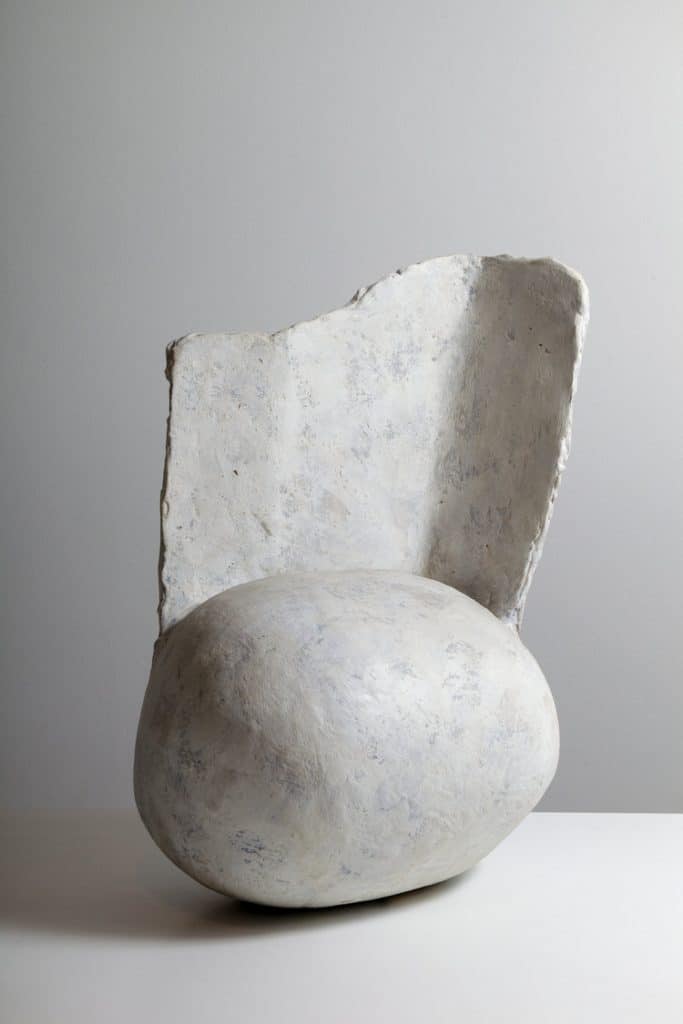
At first glance, I thought these were ceramic, but they’re actually made from the pulped remains of unwanted and abandoned books. Ben Branagan is the artist, and his “monuments” have such a brilliant sense of humour. They look both modern, and pre-historic. “Faced with a pile of abandoned books, I was interested in creating an alternative archive of the information these now redundant containers once held, returning them to an object making tradition that is prehistoric, pre-literate. Transforming one kind of container or vessel into another.”
It was the first apartment that we’d seen that I could imagine our life in. The children would share a room, and there was space enough to accommodate everything we owned. I imagined Jason and I sitting on the roof terrace after the children had gone to bed. There were red tulips stained into the glass windows, and a beautiful old stair case with grand posts. There was a working fire place. Most important of all, the apartment felt comfortable. Familiar, even. The bathrooms reminded me of my grandparent’s bathrooms in Florida, and the wall-to-wall beige carpeting was decidedly nostalgic, also. It was the carpet that sold the apartment to the kids. On our first visit, they all jumped on it like they were bouncing on the moon. We’ve since stained it with wine, coffee and toothpaste. And Jason and I have indeed spent a hundred hours on the roof. The fireplace was where I’d sit every evening in the winter months listening to Bruce Springsteen. Never could we have anticipated quite how much time we’d spend within these four walls, that all five of us would quarantine in this bright and comfortable apartment, and that the living room would double as a classroom, pottery studio, home office, gymnasium and playground for almost five months. The neighbourhood, a twenty minute walk from ours, has none of the grit, character and warmth of South Annex, but it’s been thoroughly convenient. I’ve enjoyed the local gardens and beautiful homes, and most recently, we’ve all been grateful for our proximity to one of Toronto’s loveliest ravines. Our landlady is an avid gardener, and to be surrounded by her lavender, orange blossom and peonies, has truly been a pleasure. What I have loved the most, are all the trees that surround us. To be in the heart of a city, especially of late, and to feel like we’re in the woods, has been golden. I could stay here forever, but that’s how I feel about most places I grow roots in. Which come to think of it, may be everywhere I go.
On Saturdays, my Dad drank Guinness. We ate Shepherd’s Pie and green peas for lunch, and he always washed the meal down with a pint of dark Irish dry stout. I came across this photo today and it made me think of our Saturday lunches. It was taken on the Aran Island of Inis Meáin in 1971 by American photographer Winfield Parks.
I really like this photo of Gustav Klimt boating with his wife, Emilie Flöge. Emile’s sister, Helene was married to Gustav’s brother Ernst. Klimt died from a stroke in 1918. I read that his last words were, “Get Emilie.” She inherited half of Klimt’s estate, and the the other went to the artist’s family. I love her hair in this image, and the enormous sleeves on her caftan. And the way she is looking straight at the camera, while Klimt looks ahead.
I love the soft, dreamy feel of John Cimon Warburg‘s autochrome photos. Autochromes originated in the early 1900s and used potato starch dyed various colours. Longer exposure times created pointillist specks of colour and a nostalgic, blurry ambience. It was this cow, shot on Saltburn Sands in 1915, that stopped me in my tracks. There was something comforting and familiar in the image. I read that asthma made it hard for Warburg –– born into a wealthy family –– to hold down a full time job, and so he dedicated his days to photography. It’s a beautiful body of work; if you have the time, have a look.
My hands haven’t touched clay in weeks. And then this morning, I felt the urge to make something. My Mum sends me images of ceramics quite often, and these blue and white tiles reminded me how much I miss playing with this simple palette. I then happened upon this striking sculpture (below) by British artist, Gordon Baldwin and these matte white vases embossed with sea creatures by Swedish artist, Anna Lisa Thompson. Who knows how all this will translate when I throw some clay around later. Very often, it’s the feeling an image conjures, that’s what comes out in the clay.
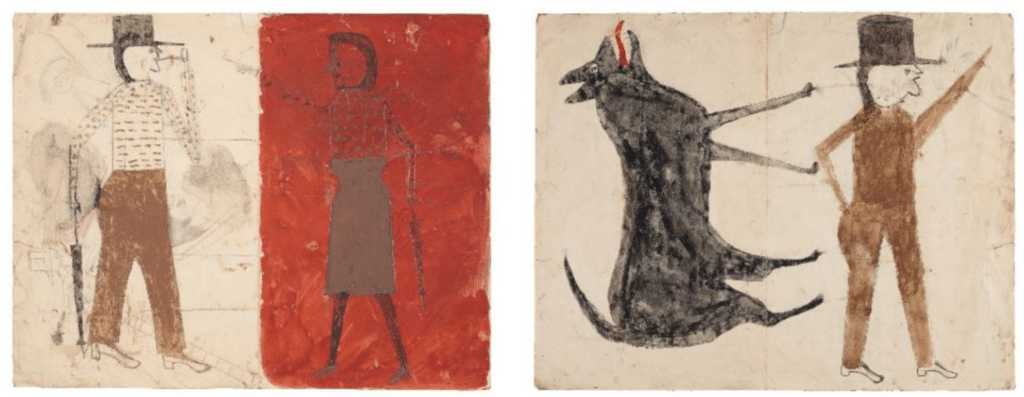
Bill Traylor was born into slavery, and spent most of his life working on a plantation in Lowndes County, Alabama. In his later years, Trayor moved to Montgomery and it was there that he started to draw. He produced nearly 1,500 pieces of art –– many sketched on scraps of cardboard –– all depicting rural and urban life. In this moving film, Cara Zimmerman, a Christie’s specialist in outsider art, talks about a Bill Traylor painting –– Man on White, Woman on Red –– that director, Steven Spielberg gave actress, Alice Walker when they completed The Colour Purple. When Zimmerman took the painting out of its frame, she discovered another painting of a man and a dog on the reverse. “The work is unique in this respect,” she says, “and presents us with another intriguing story.” The name of the painting is now, Man on White, Woman on Red/Man with Black Dog. Traylor’s work offers a perspective into life in the South in the early 1900s, no longer the perspective of an outsider, but rather a glimpse into the mind and life of a self taught, modern artist. “We’re at a point in time, art historically and otherwise, where we’re really starting to evaluate what the dominant narratives should be in our society, and in our history,” says Zimmerman.
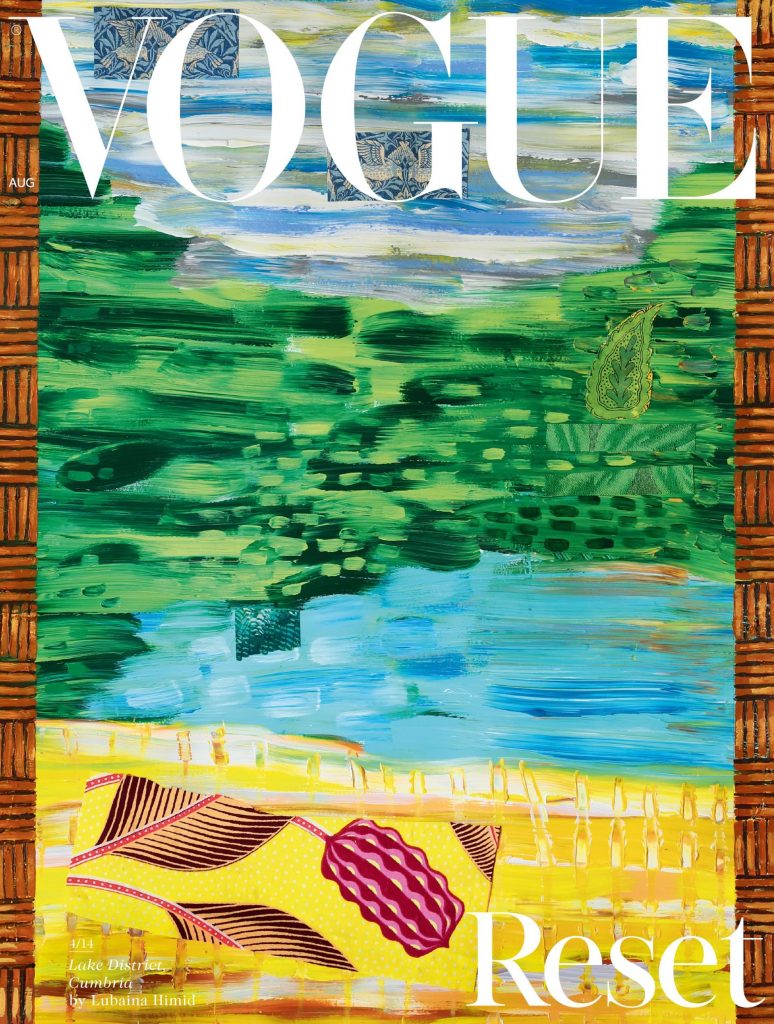
Under the stewardship of Edward Enninful, August Vogueis featuring 14 covers that celebrate nature, created by British artists from Nick Knight to Nadine Ijewere to Lubaina Himid. The theme is “reset”, poignant and timely, as we reflect on the world around us, and the experiences of the last four months. “The familiar patterns of our lives have been broken, the future is unknowable, and all of us are searching for signs and wonders, for reassurance, for hope, for things that make sense to us when everything seems desolate,” writes British writer and naturalist Helen Macdonald. “We are beginning to view nature through new eyes.” David Hockney’s painting, with its green meadows and honey coloured wheat fields, is a beautiful expression of the British country side. “It is a place rich with myth and reflection, and has long been seen as a repository of national identity.” Craig McDean’s image from the Lake District is so warm and mellow, and Mert Alas’ majestic red sunset speaks of hope and possibility. “Its maintenance enjoyed renewed focus as human activity slowed down in late spring, from the indelible images of clear canals in Venice to an absence of smog over Los Angeles,” said Enninful. “As the world rushes to find its feet again, we all need to be more mindful of the toll our previous pace of living took on nature.”
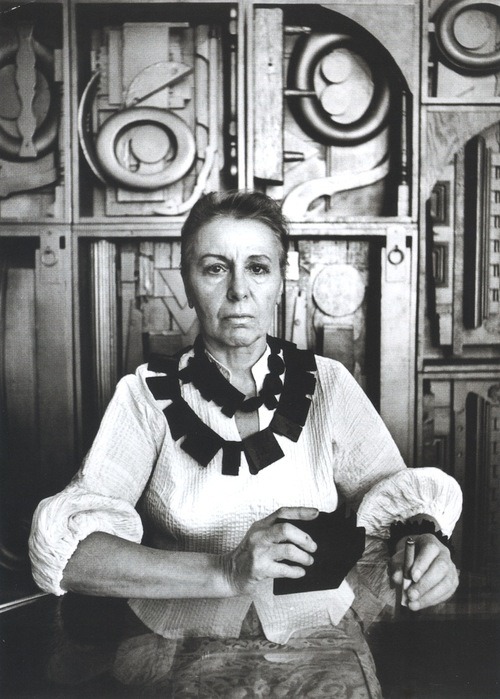
One of the things that I love about Louise Nevelson, are the outfits, not to mention the lashes, that the artist wore to work. Nevelson was well into her forties before she sold a sculpture to anyone other than another artist, and today, her huge, monolithic wooden structures are central to America’s art history. She was ballsy, fastidious and eccentric. She smoked Tiparillo cigars. And yes, she wore lashes made of mink. “I have never liked the middle ground –– the most boring place in the world.”
I came across the beautifully anthropomorphic ceramics of Jean Derval today, and immediately I thought about Picasso. Constant comparisons to another artist can’t be easy, especially an artistic titan like Picasso. The two men worked together –– Derval trained with Picasso in the late 40s at the famous Madoura workshop –– and Picasso’s influence is evident. In 1951, Derval founded his own studio, Le Portail and gradually moved from domestic pottery to sculpture. The truth is, Picasso’s influence runs through most artists because his work spanned so many years (he was wildly prolific) and because he explored so many genres and styles over his 80-year career. What an artist like Derval does with that influence, and all the many other things that inform his process, is what makes the work unique. As Mark Twain said, “There is no such thing as a new idea. It is impossible. We simply take a lot of old ideas and put them into a sort of mental kaleidoscope. We give them a turn and they make new and curious combinations. We keep on turning and making new combinations indefinitely; but they are the same old pieces of coloured glass that have been in use through all the ages.” As original as Picasso was, he also drew from the many inspirations around him. No doubt, that inspiration included the work of the many artists he inspired.