I find Kurt Arrigo‘s underwater images quite mesmerizing. “From the Mediterranean to the Galapagos, to the Himalayas, remote South Pacific, and icy waters of Norway, Kurt’s majestic images capture the world’s natural beauty from above and below the ocean’s surface,” reads his bio. I love his images of whales and deep sea divers, but it’s the sea horses that took my breath away. There’s something mythical, otherworldly about them.
I came across this illustration today by French artist, George Barbier today and it made me wistful for lake life. On these very hot days, I like to imagine myself swimming like a trout in an ice cold lake. One of our favourite summer day trips is to the bluffs in Prince Edward County. The beach is all rocks and driftwood, and the water is bright blue, and invigoratingly cold. Very often, we’re the only people on the beach. We’ll get there this summer, I’m sure.
Just look at these charming, little baskets of berries. Have you ever seen a prettier display of fruit? The pastry looks like it’s woven from willow. The image is from a croissanterie in Melbourne, Australia. According to the New York Times, Lune makes the best croissants in the world. In Toronto, Pain Perdu makes perfect croissants. A guest brought us a box of them today. I’ve always had a soft spot for the croissants from Harbord Bakery, even though they’re not nearly flaky enough to be French. I love to slather salty butter on a warm croissant, you know, for buere on buere.
One day, I will own a Ronan Bouroullec painting. I don’t care which one, I love them all. They’re Miyake pleats on a canvas. I read that his approach is totally unconscious, and that he creates in the manner of the Surrealists, with his intuition holding the brush/pencil. They’re so simple, and yet breathtaking.
At first glance, I saw sequins, pearls and beads. This Moffat Takadiwa wall hanging is actually created from found bottle caps, foil caps, aerosol tops, and keyboard keys. The Zimbabwe-born artist is known for his intricate wall sculptures made from discarded objects. “He weaves together these small everyday objects to make impressive organic forms evocative of jewel-encrusted excess or a ritualistic kind of minimalism,” reads his biography. “The artist’s choice of materials communicates his concern with issues around consumerism, inequality, post-colonialism and the environment.” Have a closer look at the spiritual garbage man’s (that is how Takadiwa describes himself) work –– it’s kind of astonishing how something so beautiful can spring from everyday discards.
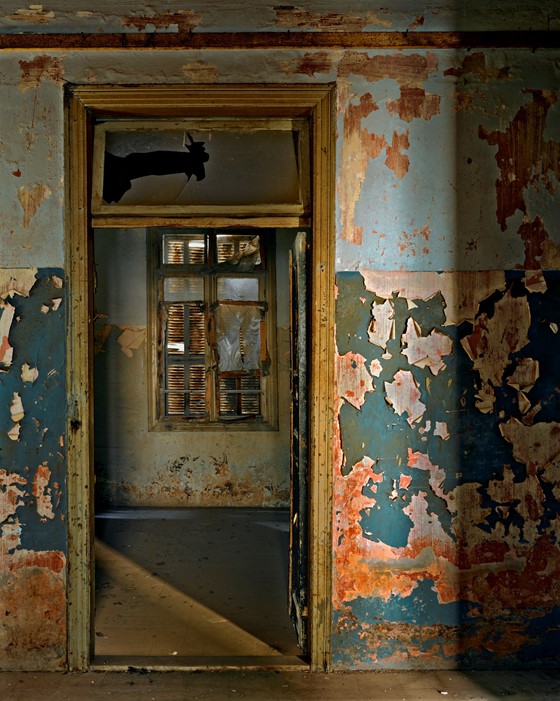
I came across the exquisite photographs of Robert Polidori today. I’ve happened upon one or two of his images before –– most notably the Havana home of painter, Amelia Peláez –– but today was my first dive into his extensive body of beautiful architectural spaces. If you have a moment, have a look at his extraordinary range, from a beaten up old slave shack, to the restoration works at Versailles, to the weathered walls of Hotel Petra in Beirut. As we move into our new home –– a true labour of love –– Polidori’s wisdom resonated with me a great deal. “Besides the obvious sheltering from the extremes of the elements, people make rooms to live in as if they are animated by an unconscious desire to return to a prenatal life, or even before that, to a soul life. This is what they exteriorize in rooms, their internal soul life, or less magically put, their personal values, if you will.”
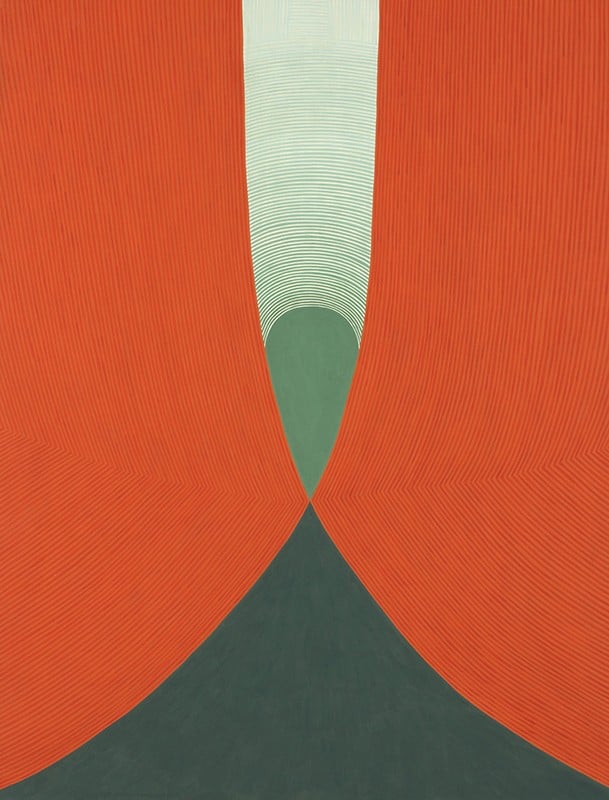
Jenny Kemp‘s brightly coloured canvases are hard to miss, and some are so densely patterned that one could stare at them for hours. Biology is a central theme, and Kemp’s process is highly considered. “Biologically-inspired imagery, stemming from contemplations on our relationship to organic matter is built through lines and planes of subtly shifting hue intensities and gradations, generating form through a slow additive process of layering line work by hand that parallels growth and changeability in the natural world.” Personally, I’m drawn to the simplest canvases, ones that feature bold colour blocking and beautiful, organic shapes. “My interest in abstraction lies in its ability to satisfy my desire to create images that serve to represent unseen phenomenon.” The inner workings of the human body, realized through intricate lines and vivid colours, is quite mesmerizing.
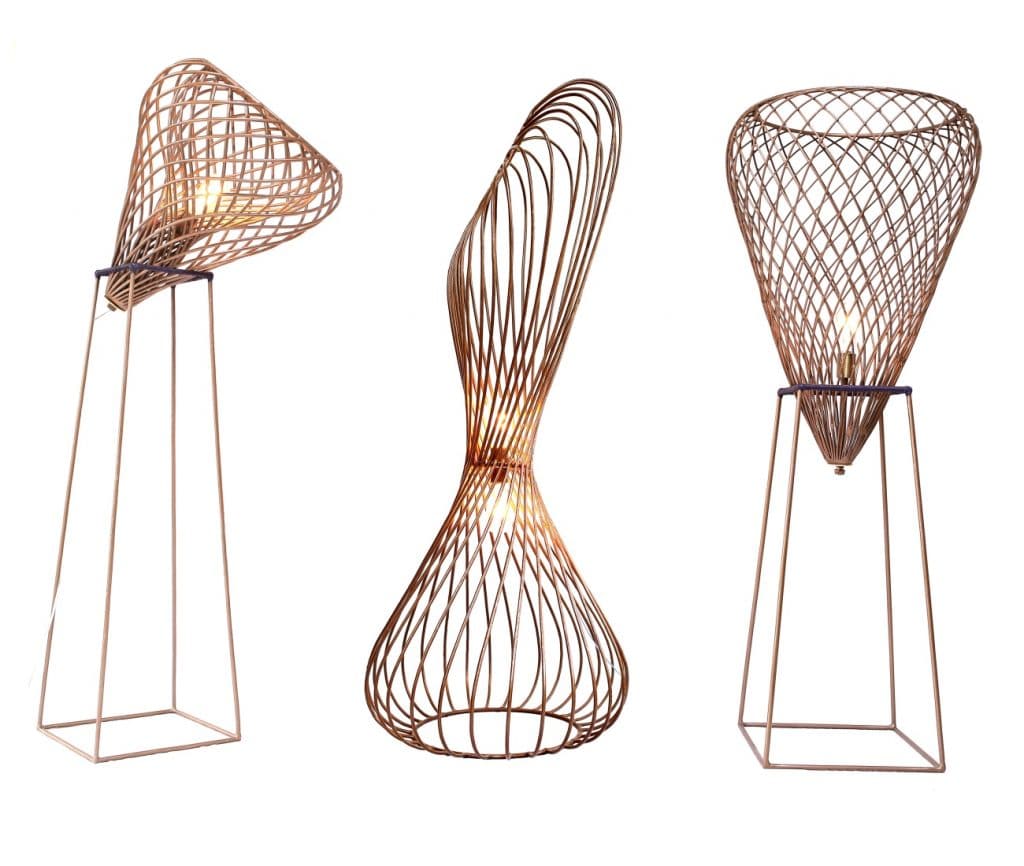
Lani Adeoye’s woven lights are handcrafted in Nigeria and exude such warmth and nostalgia. To me, they have a decidedly 70s vibe, with a modern, sculptural twist. The line is called ITE which means nest in Yoruba. Adeoye is Parsons trained and divides her time between New York, Toronto and Nigeria. These lights, she says, are Inspired by the layered structure of a bird’s nest.
It’s been a while since we spent a penny together, and this loo is too divine not to share. I have no idea what stone the sink is carved from –– onyx, granite, amazonite –– but it’s bonkers beautiful. As are the brass swan taps. The wallpaper –– swans and dragonflies on a Schiaparelli background –– is pure whimsy, and that chandelier of fern leaves is the perfect topper. If I ever write my tome on toilets, this one may make the cover.
I came across this photograph by the late American artist, Paul Strand this afternoon and it felt so beautifully familiar. Shot in Nafplio, a seaport town in the Peloponnese, “the broom shop” reminds me of the many small and charming European shops that sell everything from light bulbs and umbrellas to cigarettes, shoes and house plants. I love those shops. And I love that they still exist in an sea of specialized retailers.